Don't Text Her
She's not the best thing you ever had. Your brain just thinks she is.
Most no contact apps count your days. This one explains why you can't stop thinking about her, and gives you something to do at 1am that isn't texting her.
App + 30-Day Manual + Toolkit · Lifetime access · 14-day refund
It's 1am. Your thumb is on her name.
The no contact app for men, built by someone who needed it himself. A protocol, not advice.
The thread is open. You type something, delete it, type it again.
This is the 30-day system built for that exact moment. Not the morning after, when it's easy to be wise. That one.
App + manual · Lifetime access · 14-day refund
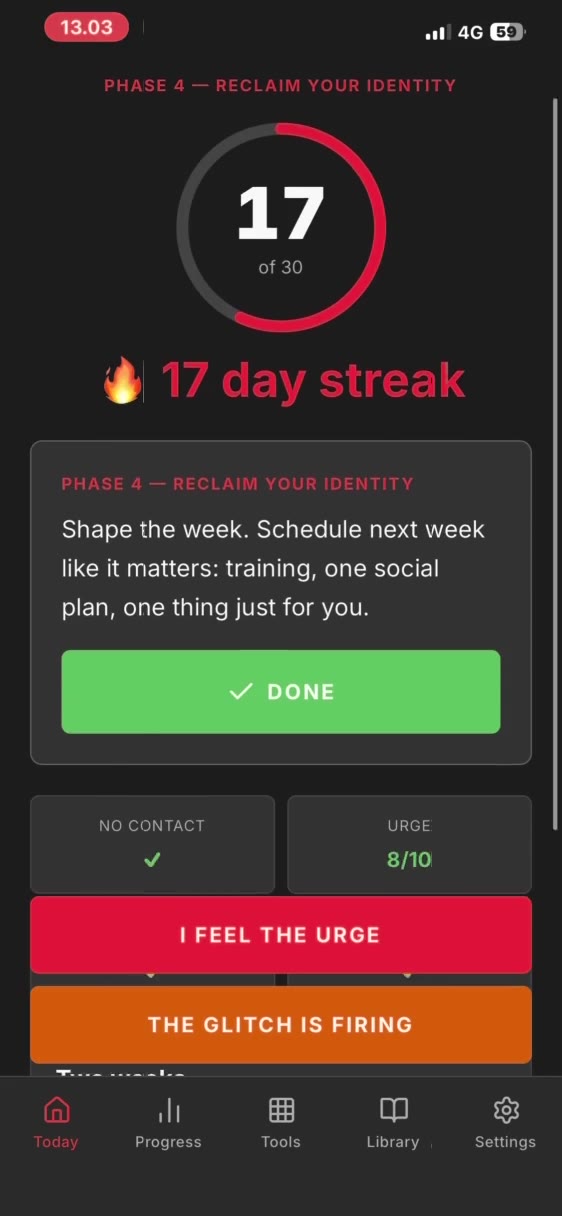
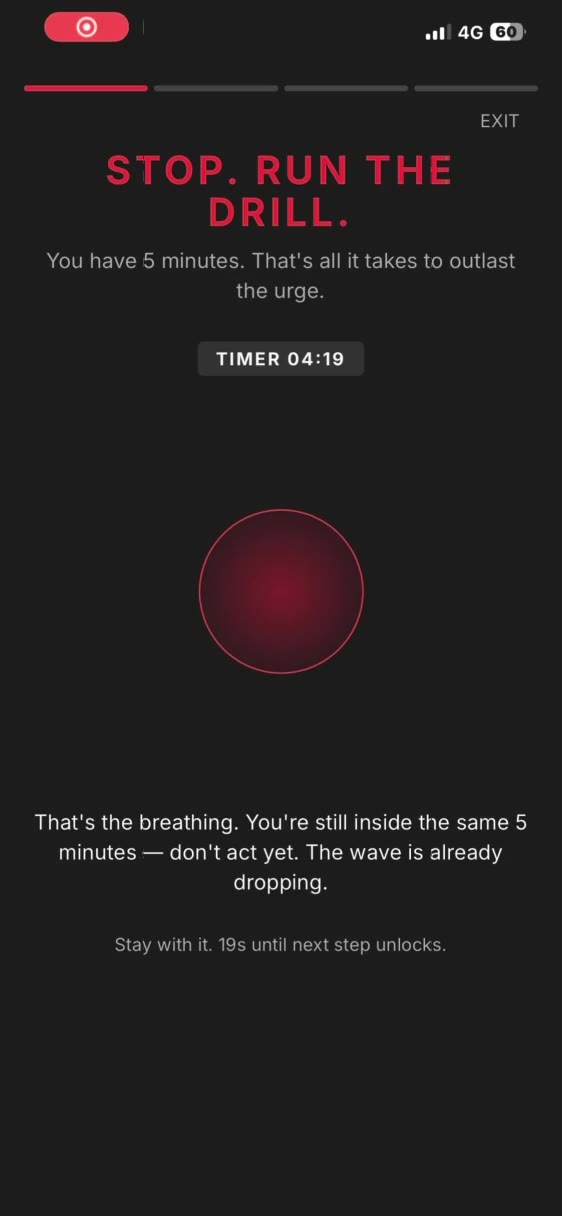
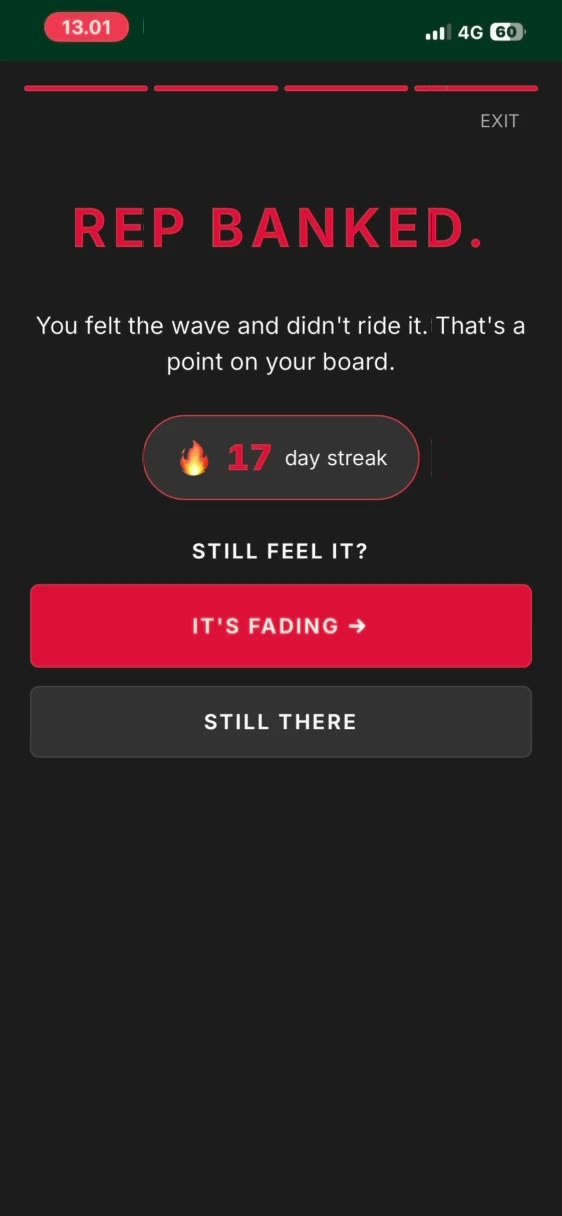
Open it at 1am. Run the drill. Bank the rep.
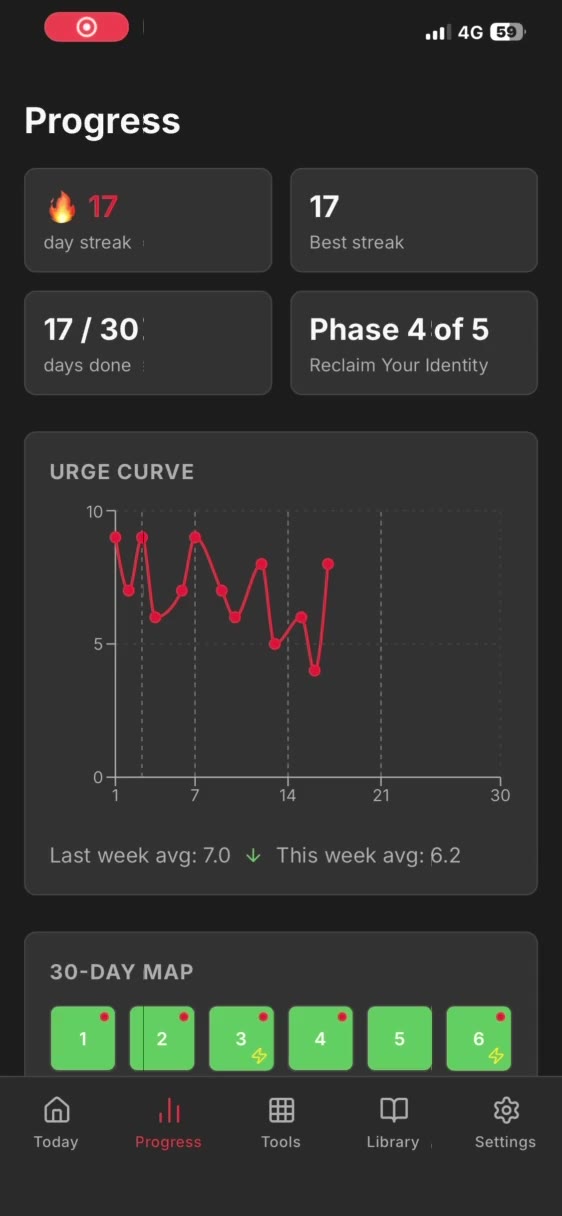
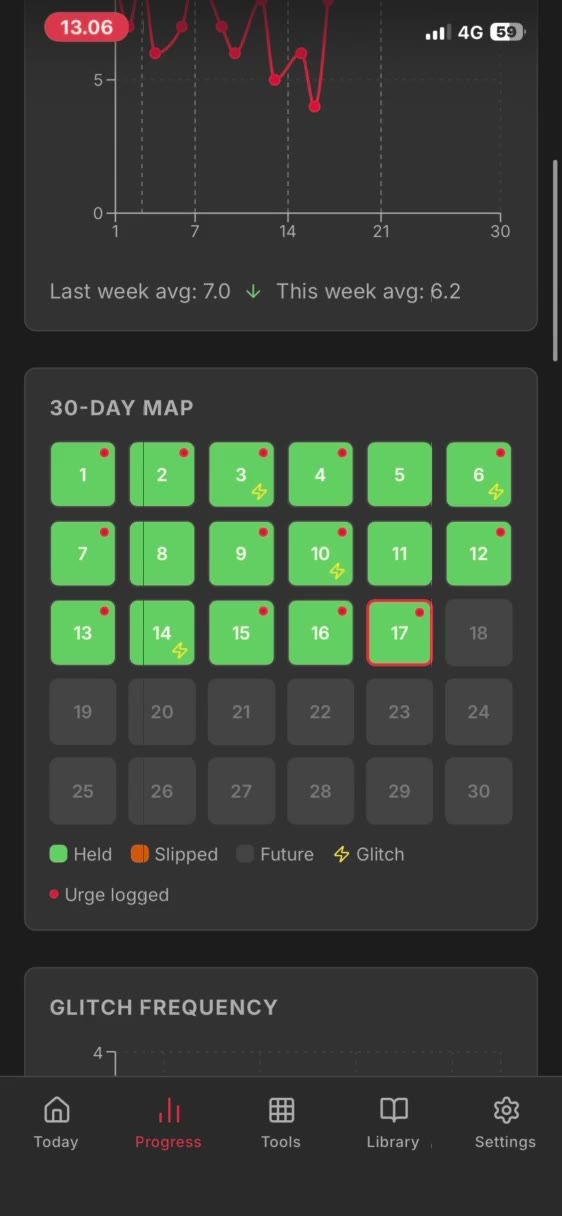
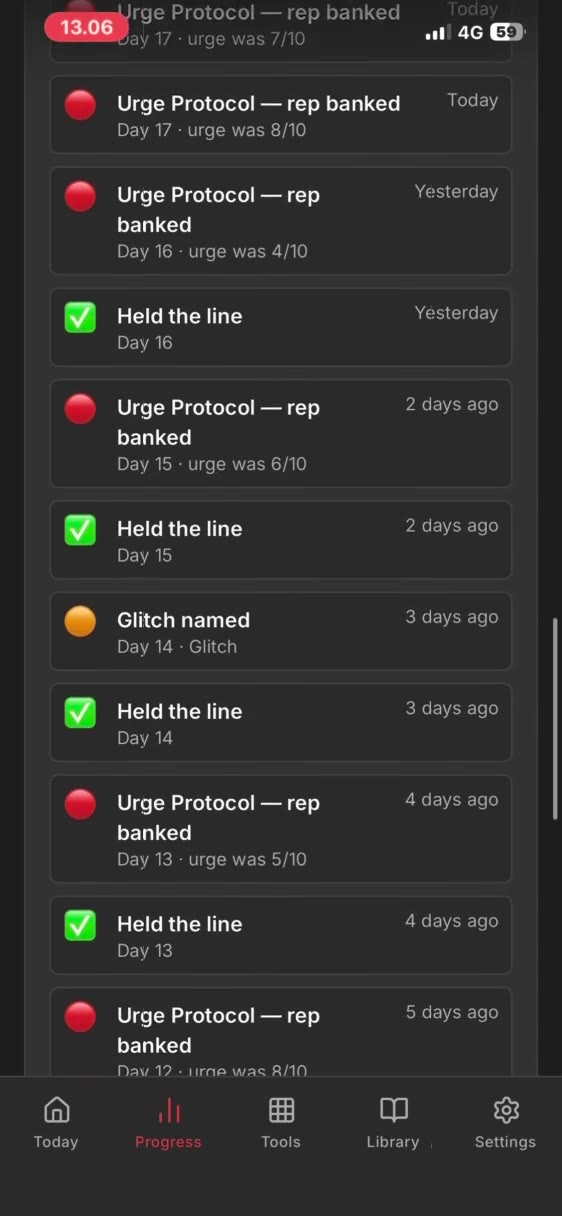
Thirty days of evidence. The curve, the map, and a number that only goes up.
The Glitch
Here's the part nobody tells you.
When you were with her, you didn't think about her every second. Some days you barely thought about her at all.
Now she's all you think about.
That should tell you something. If she was really the most important thing in your life, you'd have been this caught up the whole time you had her. You weren't.
She didn't change. The only thing that changed is that you can't have her.
Think about a toy you had as a kid. It sat in the closet for months, untouched. Then someone went to throw it out, and suddenly it was the most important thing you ever owned.
Nothing about the toy changed. Someone was just taking it away.
That's what your brain is doing with her.
It's called The Glitch. It makes her look perfect. It quietly deletes the arguments, the bad nights, the real reasons it ended, and leaves you staring at the highlight reel.
The Glitch feels exactly like love. That's what makes it dangerous.
Once you can name it, it loses half its power. You'll still want to text her. But at least you'll know what you're actually feeling, and that's usually enough to wait it out.
The Glitch has five voices.
You'll hear at least one of these tonight.
Right now these feel like truth. They're not. They're your brain reacting to losing access to someone, and it would do the same thing with almost anyone you saw every day and then suddenly didn't.
Name it and it loses its grip.
This isn't a streak counter. It's a written system.
Ten chapters. Nine printable tools. A specific job for every one of the thirty days.
The Loop
You know the loop.
Her name is in your phone. You check because it hurts. It hurts more, so you check again. That's the loop. It runs all night. Every night.
"Checking her name" isn't just texting. It's the profile you still pull up, the story you watch on repeat, the who-liked-this spiral at midnight. Same loop, different door.
Somewhere in the last few weeks she became the only thing you think about. And here's the strange part: before the breakup, you weren't like this. Your brain isn't falling deeper in love here. It's reacting to losing daily access to someone, and it would do that with almost anyone you saw every day and then suddenly didn't. Name it and it loses some of its grip. You'll still want to text her. At least now you know what you're actually feeling.
And you're sick of hearing 'just move on.' If that worked, you'd have done it by now. Nobody hands you anything to actually do at 1am. This is built for that moment, and for the 30 days after it.
Why This Exists
Built by someone who lived it.
I wrote this because I lived it.
The first two weeks, I tried to text her almost every night. Phone in hand at 1am, checking her name, hating myself the next morning.
I read all the generic advice. Block her. Stay busy. It's fine. None of it worked, because none of it gave me something to actually do in the moment the urge hit.
So I built the thing I needed. First for myself, on paper, on my own nightstand. Then as a system anyone could use.
Every protocol in here is something I ran on myself before it went in the book. None of it is theory. Outlasting an urge instead of fighting it is standard craving work, and the timing comes from the same research. What I did was strip it down to something you can follow at 1am with no training and nobody to call.
The app exists because paper doesn't fit in your pocket at 1am. I wanted the same structure on my phone that I'd built for myself on the nightstand.
This isn't therapy. It's the tool I wish I'd had at 1am.
Every tool is named and specific: the Urge Protocol, the Liar's List, the Night Shutdown Protocol. Real steps, not vague journaling prompts.
The Urge Protocol
The five minutes that decide it.
An urge feels like it will keep climbing forever. It doesn't. Left alone, it crests and starts dropping. The whole fight is just getting to the other side of that.
Most no contact apps count your days. That's a scoreboard. Nice to look at, useless at 1am, when the decision is about forty seconds long and you're losing it.
The Urge Protocol is the opposite. You open it while the urge is actually happening, and it walks you through four moves in order: breathe, read your reasons, change your state, log it. Then it holds you there until it passes.
Here's the part almost nobody tells you. Most men think the urge keeps climbing until they break. It doesn't. Left alone it starts dropping after three or five minutes, and it's mostly gone by twenty. You're not fighting an evening. You're fighting five minutes, a few times. You're outlasting it, not beating it.
The whole system runs on one idea: you're not here to win her back, you're here to get yourself back. Two scoreboards, and you only run one of them.
And it's built for how men actually go through this. Numb at first. Then it hits hard a few weeks in. Then the spiral shows up at night, when there's nobody around to perform "fine" for. It's the same rule everyone's heard of, just built for the way you'll actually go through it.
App + manual · Lifetime access · 14-day refund
The Difference
One time vs subscription. And a system vs a counter.
Most apps in this category bill you every week or every month.
This is thirty-seven dollars, once, and then it's yours. No renewal for a problem you shouldn't still have in six weeks.
There are only two scoreboards.
Her scoreboard: you win if she texts. You lose if she goes quiet. You control none of it.
Your scoreboard: you win if you held the line today. That's the only one that moves.
A counter keeps you on hers. This moves you to yours.
What's Inside
Everything, in one bundle.
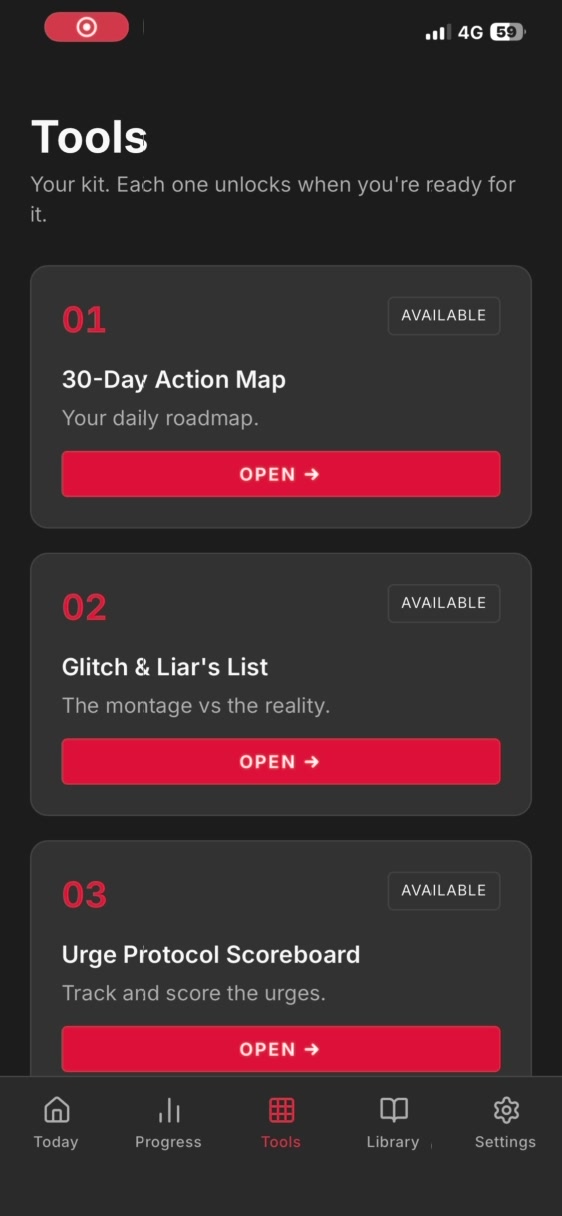
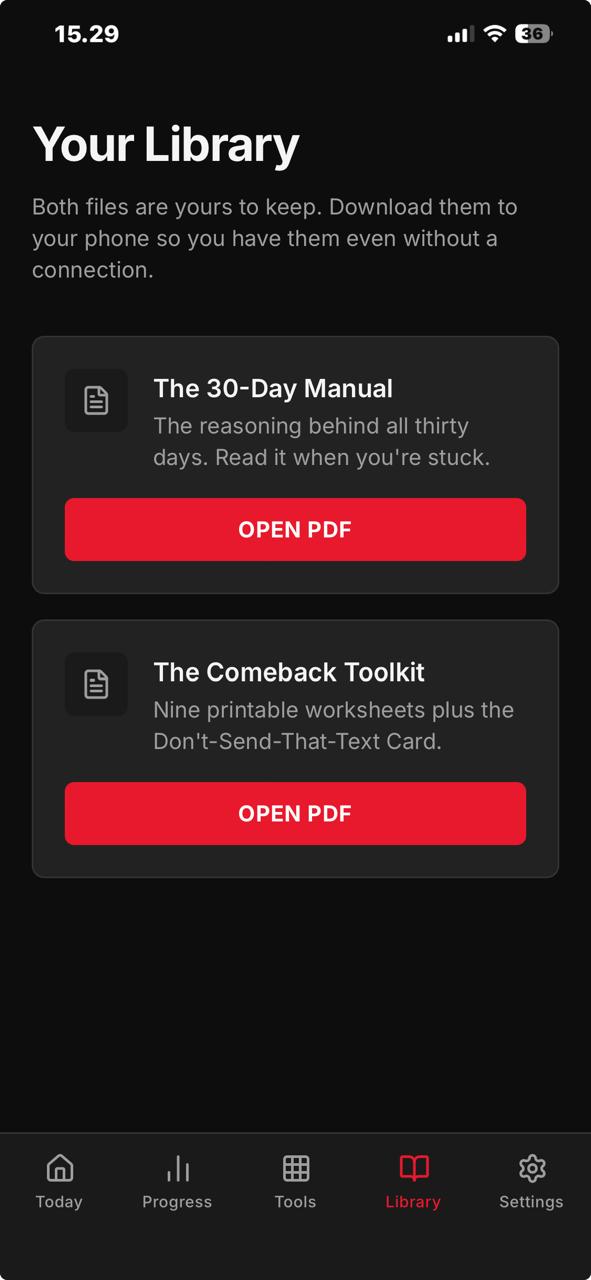
Every tool, the full library, and thirty days of it.
The App
- The Urge Protocol, guided, in the moment, on your phone
- 30-day tracker, the days you held
- Progress dashboard
- All 9 tools, digitized
The 30-Day Manual
- Days 1–3: Surviving the Crash
- Days 4–7: Closing the Doors
- The Urge Protocol
- Days 8–14: Taking Back the Nights
- Days 15–21: Rebuilding the Scaffolding
- Days 22–30: Becoming the Man
- "But What If She Comes Back", decided from strength, before you need it
- Appendix: What if you can't go fully no contact. Shared kids, lease, business
The Comeback Toolkit
- The 30-Day Action Map
- The Glitch & Liar's List Worksheet
- The Urge Protocol Scoreboard
- The Night Shutdown Protocol
- The Scaffolding Builder
- The Friendship Reconnection Template
- The Don't-Send-That-Text Card. One page, lives on the nightstand
- The Decide From Strength Worksheet
- The No Contact Appendix Kit
- Bonus: the Crisis Card
Nine worksheets, and the one people actually use is the Don't Send That Text Card. A single page that ends up living on the nightstand. Plus a Crisis Card, for the nights that go past the urge.
App + manual · Lifetime access · 14-day refund
FAQ
Straight answers.
Most of them count your days. That's a scoreboard, and it does nothing at 1am, when the decision is about forty seconds long.
This is a written system. It explains why your brain is doing this to you (we call it The Glitch) and gives you a named tool for every situation: the urge, the night, the slip, and the one where she texts you first.
No. There's a tracker inside it, but it's the smallest part.
The product is a ten-chapter manual, nine printable tools, and a specific job for each of the thirty days. If all you want is a counter, there are free ones. This is for the part a counter can't help with.
Then you're not back at zero. You're at day one with information you didn't have last time. You now know which night is dangerous for you and roughly what time it hits. The protocol assumes you'll slip at least once, and there's a section on exactly what to do the morning after.
Yes. Not because men are wired differently. Because the advice usually is.
Most breakup content assumes you'll talk it through with someone. A lot of men won't, and a lot don't have anyone asking. So this gives you something to do at 1am instead of something to feel: a rule for where the phone goes, a list to read when your head starts rewriting her, four moves to get through the urge.
The mechanism is the same as anyone's no contact: it stops the wound being reopened every 48 hours. One thing worth saying, though. If what you're really asking is whether it'll bring her back, that's the worst reason to start. You'll end up counting days as a tactic and feeling every one of them.
Not tonight, and not while you're deciding at 1am. There's a framework in the manual for making that call in daylight, before it happens, so you're not choosing at the worst hour with the worst information. Two words back after four hours is not a reopening.
No, and it doesn't pretend to be. It's a behavioural protocol for one specific problem: not sending the message. If you're dealing with something bigger than a breakup, this isn't a substitute for talking to someone. There are crisis numbers on the card and a link at the bottom of this page.
Then standard no contact doesn't apply to you, and being told to just go no contact makes you feel like you're failing at something that was never available to you. There's an appendix for exactly this: one channel, one topic, and a rule about never replying in the first hour. That rule alone does most of the work.
No. $37 once, and nothing renews, ever. In six weeks you shouldn't need this anymore, and a product that keeps billing you after that isn't on your side.
The guide and the worksheets download straight away. Your receipt includes the link to set up your app account. Use the same email you bought with, and you can start day one tonight.
PDF, readable on your phone. The nine worksheets are separate files and printable.
It runs in any mobile browser, so there's nothing to download from an app store. To keep it one tap away, add it to your home screen.
On iPhone, open donttexther.com in Safari, tap the Share button, then Add to Home Screen. It only works in Safari, Chrome on iPhone can't install it.
On Android, open it in Chrome, tap the three dots, then Add to Home screen.
14 days, no questions asked. Email hello@donttexther.com and I'll refund you in full. You don't have to explain yourself or send anything back. If it didn't help, it didn't help.
Get yourself back.
This was never about her. It's about you.
The system just makes the decision you already made a little easier to keep, night after night.
App + manual · Lifetime access · 14-day refund
Want to text her right now?
Get the free guide: the Don't-Send-That-Text Card.
One page. The four moves to run the moment the urge hits, before you open her chat and type something you'll regret.
Print it, fold it, keep it in your wallet. Or screenshot it and make it your lock screen.
No spam. Unsubscribe whenever.